Robotics·2024 — Present
Avni Autonomous Ground Vehicle
Deep-Terrain Competition Rover Platform Engineered for GPS-Denied, Unstructured Environments
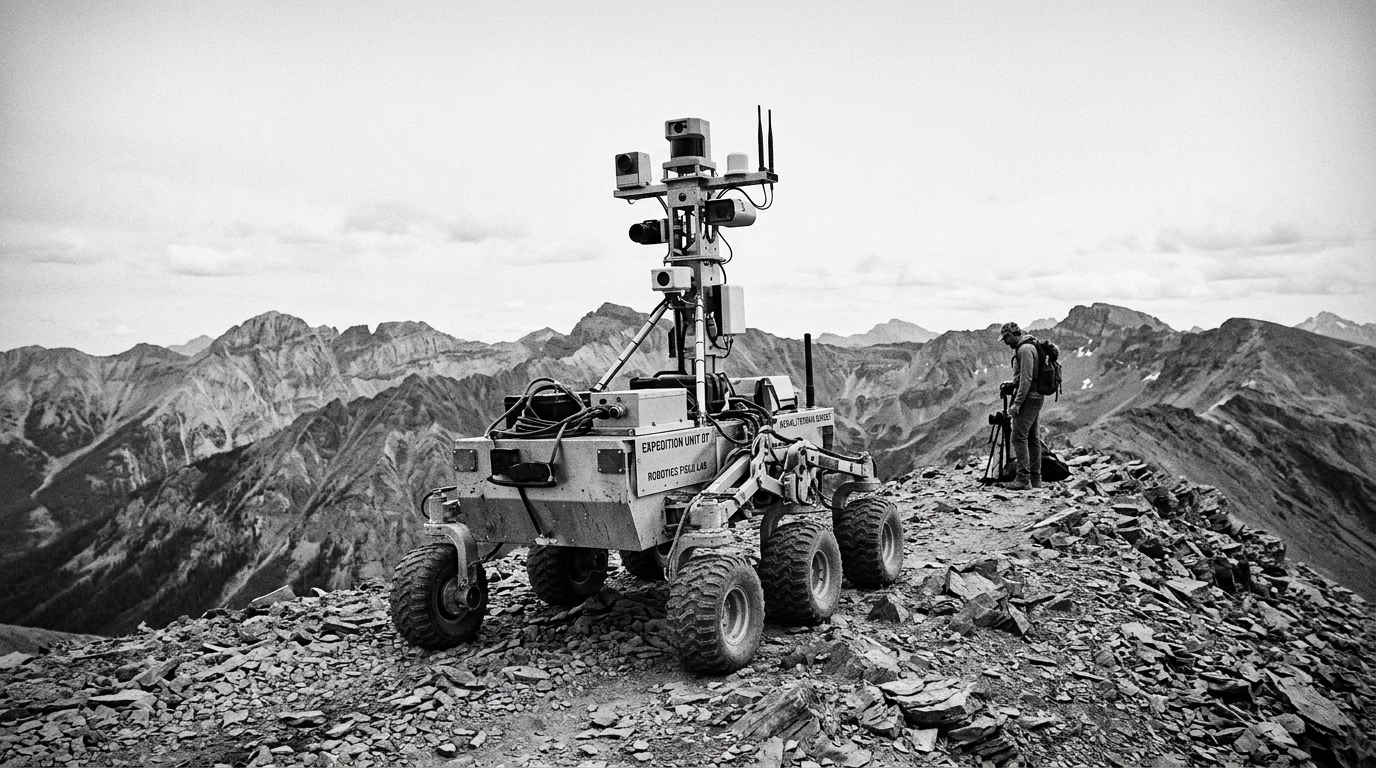
Field Testing PlatformUGVC 2026, Egypt
Drive System
4WD Direct BLDC Hub
Inverted-V articulated suspension
Control Timing
11.8 ms Deterministic
Linux SCHED_FIFO real-time priority
The Problem
Standard autonomous ground robots fail on rough outdoor terrain when dust occludes optical sensors, loose gravel induces non-linear wheel slip, and canyons eliminate GPS satellite fixes. In deep field trials, latency spikes above 15 milliseconds in the odometry pipeline lead to immediate filter divergence and physical collision.
Engineering Highlights
- Inverted-V Articulated Suspension: Custom rocker mechanism maintaining continuous four-wheel ground contact over severe slopes without drivetrain gearboxes or mechanical backlash.
- Galvanic CAN-FD Bus: Electrically isolated multi-drop network isolating 48V motor controller transient spikes from the central compute carrier board.
- Hardware PPS Synchronization: Microsecond hardware pulse triggering stereoscopic vision sensors and IMU to eliminate temporal frame jitter in 3D costmaps.
- Deterministic 11.8ms Control Loop: Priority-inherited C++ ROS 2 scheduler bound to isolated CPU cores, guaranteeing sub-15ms actuation response under heavy LiDAR loads.
Results
Traversed mixed gravel and slope courses at sustained speeds of 4.2 m/s during qualification trials for the Unmanned Ground Vehicle Competition in Egypt, maintaining continuous localization without GPS fixes.